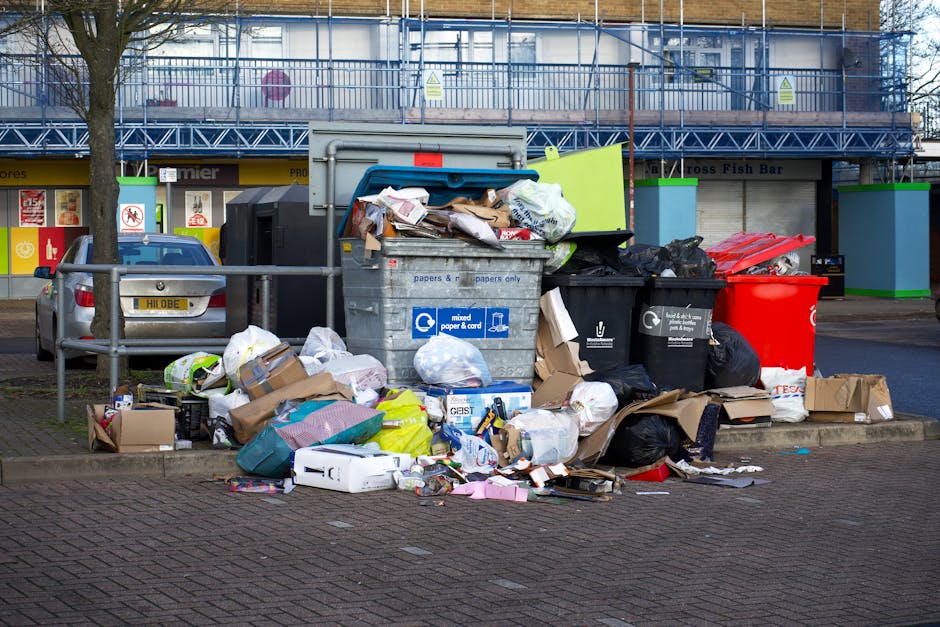
What to know about last minute Hackbridge rubbish bookings

If you have ever stood in a hallway full of broken furniture, garden cuttings, or builders' debris and thought, "Right, this needs sorting today," you already understand the pressure behind last minute Hackbridge rubbish bookings. It is rarely a tidy, planned job. More often, it is the result of a move, a landlord inspection, a trades deadline, a sudden clear-out, or that moment when the pile in the garage becomes impossible to ignore. The good news? A rushed booking does not have to mean a bad booking. With the right expectations, a quick rubbish collection can still be smooth, safe, and surprisingly straightforward.
This guide breaks down what last minute rubbish removal actually involves, what can delay it, how to prepare in a hurry, and the mistakes that cost people time and money. It also covers practical choices for homes, flats, offices, and renovation jobs in Hackbridge, so you can make a sensible decision without faffing about.
Why last minute Hackbridge rubbish bookings matter
Speed matters because waste tends to create knock-on problems. A pile of rubbish blocks access, slows down trades, makes cleaning harder, and in some cases creates safety issues. If you are trying to hand back a rental, finish a refurbishment, or clear a property before a deadline, even a one-day delay can throw off the whole plan. That is why people looking for same-day or next-day rubbish clearance usually want more than just a van. They want certainty, clear communication, and a team that can turn up when promised.
In Hackbridge, the real challenge is often not the rubbish itself but the timing. Perhaps the council collection is not suitable for bulky items. Perhaps the skip would take too long, take up road space, or need permits and extra admin. Maybe your flat has awkward access and you cannot carry a fridge down three flights of stairs without help. Last minute bookings matter because they solve the urgent part of the problem without making the rest of your week more complicated.
There is also a financial angle. Leaving waste sitting around can increase the cost of a job in roundabout ways. Tradespeople may need to come back, storage can become awkward, and rental check-outs can get tense very quickly. Truth be told, a fast rubbish collection often prevents a more expensive mess later.
If you want a clearer picture of how a professional clearance company positions itself around response times, service scope, and working standards, it can help to review the company's about us page alongside its insurance and safety information. That kind of background is useful when you are booking in a rush, because speed is only helpful if the service is still handled properly.
How last minute bookings work
Last minute rubbish bookings are usually simpler than people expect, but there is still a process behind the scenes. Most providers need to understand what needs removing, roughly how much there is, where it is located, and whether there are any access issues. The more precise you can be, the more likely it is that the first visit solves the problem.
Typically, the workflow looks something like this:
- You describe the waste. This might be household rubbish, furniture, garden waste, mixed junk, or light construction debris.
- You share photos or a rough list. A quick visual helps judge volume, lifting difficulty, and whether anything needs special handling.
- You confirm access and timing. Stairs, parking, tight hallways, and lifting restrictions all matter more than people realise.
- You receive an estimate or quote. For urgent work, this may be based on the estimated load size and labour needed.
- The team arrives and loads the waste. In a good setup, this is the part that feels almost boringly efficient. That is ideal.
- The waste is taken away for sorting, disposal, or recycling. Responsible handling should always be part of the service, not an afterthought.
Some jobs can be done the same day if the schedule has space and the load is straightforward. Others need a narrow time window, especially if parking is limited or the waste includes bulky or awkward items. This is where a calm, accurate description saves a lot of back and forth. "A few bags" and "a van load" are not really the same thing, are they?
For jobs involving mixed rubbish, old furniture, or property clear-outs, related services such as house clearance, home clearance, or furniture disposal can sometimes be more suitable than a generic waste removal booking. If the job is bigger than you first thought, those pages can help you compare what kind of clearance is actually needed.
Key benefits and practical advantages
The biggest benefit is obvious: you get the space back quickly. But there are a few more advantages worth spelling out, because they make a real difference when time is tight.
- Less stress. One phone call or enquiry can turn a chaotic pile into a plan.
- Faster turnaround for deadlines. Moving out, moving in, refurbishing, or preparing for an inspection becomes easier.
- Reduced manual lifting. Especially useful for heavy furniture, broken appliances, or rubbish in lofts and garages.
- Cleaner, safer access. Clear floors and walkways lower the risk of trips and damage.
- Better use of limited space. Useful in flats, terraced homes, office units, and driveways where storage is tight.
- More controlled disposal. A proper clearance team should sort items sensibly rather than leaving you to guess what goes where.
There is a practical emotional benefit too, if that does not sound too dramatic. When the pile is gone, the room feels different. Quieter. Bigger. Less nagging. People often underestimate how much visual clutter weighs on a space until it is finally out of the way.
For landlords, letting agents, facilities managers, and homeowners trying to stay on schedule, quick rubbish collection can also reduce friction between different moving parts of a job. The decorator can start. The cleaner can finish. The removal team can get in. Simple, but not always easy.
Who this is for and when it makes sense
Last minute Hackbridge rubbish bookings make sense for anyone who has run out of time but still needs a proper clearance job done well. It is not just for emergencies, either. Sometimes the timetable is the problem, not the waste.
Common situations include:
- End-of-tenancy clear-outs where items must be removed quickly before handover.
- House moves where unwanted furniture, bags, or broken bits are left until the last minute.
- Garden projects where cuttings, soil, branches, and old planters start taking over.
- Garage or loft clearances that have become more ambitious than expected.
- Office or business clean-ups where storage, old stock, or surplus furniture needs to disappear fast.
- Builders' jobs where debris has to be cleared so the next trade can move in.
Sometimes the booking is urgent because of a people problem, not a waste problem. A landlord has given a deadline. A buyer is due to view the property. Your team has left a site neat but not cleared. Or the family has decided that the old sofa is not going to make the move after all. We have all seen jobs like that: the "we'll deal with it later" box that somehow turns into a small mountain by Friday afternoon.
If you are dealing with more than a few loose items, it may be helpful to compare whether the job is closer to garage clearance, loft clearance, or office clearance. Picking the nearest match often gives you a more accurate quote and a better idea of how the visit will work.
Step-by-step guidance
If you need to book quickly, the best results usually come from being organised in a very unglamorous way. Nothing fancy. Just clear information, clear access, and quick decisions.
- List everything that needs removing. Write it down room by room if necessary. A quick note in your phone is fine.
- Take photos from a few angles. Include the full pile, any tight corners, stairs, doorways, or parking restrictions.
- Separate the obvious stuff. If some items are staying, move them out of the way now. It saves time later.
- Check for special items. Paint, gas bottles, batteries, chemicals, fridges, or anything unusual should be flagged early.
- Ask how the price is calculated. Is it volume-based, labour-based, item-based, or a mix? You want clarity, especially when time is short.
- Confirm the arrival window. A same-day job is only useful if you know when the team is likely to come.
- Prepare access. Unlock gates, reserve parking where possible, and clear a path to the waste.
- Be ready to make a quick decision. Urgent slots can disappear fast. Hesitation can cost you the window.
A small but useful tip: if you are booking on behalf of a relative, tenant, or colleague, gather all the information before you call. It avoids the classic "I'll just check that and call you back" dance. Charming in theory, inefficient in practice.
Where rubbish removal is part of a broader property clear-out, the service may overlap with flat clearance or furniture clearance. If the job is mainly loose waste rather than furniture, a broader waste removal booking is often the cleaner fit.
Expert tips for better results
After enough rushed bookings, a few patterns become obvious. The customers who get the easiest experience tend to do the same things: they communicate clearly, they do not hide awkward details, and they treat the quote as a two-way conversation rather than a guessing game.
Here are the most useful habits:
- Overdescribe the awkward bits. Narrow staircases, top-floor flats, locked courtyards, low ceilings, soft ground, and parking problems all matter.
- Give honest volume estimates. If it looks like two van loads, do not call it one and hope for the best.
- Ask what happens if the load changes. Last minute jobs can grow. A clear adjustment process avoids surprises.
- Keep fragile or valuable items separate. The faster the team works, the more important it is that keep items are not mixed into the waste pile.
- Confirm what is included. Loading, labour, disposal, and paperwork should be understood before the team arrives.
- Be ready for a slightly earlier or later arrival. Traffic, parking, and access can change the day. That is life, unfortunately.
To be fair, a good clearance team should be able to guide you through most of this. But it helps if you already know the basics. You will feel calmer, and the job tends to go faster. That calm is underrated.
If you are also thinking about how the service is paid for, the company's pricing and quotes guidance and payment and security information are worth a look before you commit. The best urgent booking is the one that is fast and transparent.
Common mistakes to avoid
The main mistakes are usually simple, which is why they happen so often. In a rush, people cut corners. Fair enough. But a little care up front can save a lot of hassle.
- Booking only by guesswork. Saying "there's not much" when there is actually a whole garage of stuff leads to awkward delays.
- Hiding access issues. A van may be available; getting to the waste may be the real challenge.
- Forgetting restricted items. If there are items that need special handling, mention them early.
- Leaving mixed waste unsorted where it matters. This can slow the job and make recycling more difficult.
- Assuming same-day always means immediate. Sometimes it means "today if possible," not "in the next twenty minutes."
- Not checking the service scope. A company may be able to do rubbish removal but not the specific type of clearance you need.
One mistake I see more often than you would expect is the "we'll just put everything by the front door" plan. Sounds practical. Usually ends up blocking the hallway, annoying the neighbours, or turning into a trip hazard. Not ideal.
Another one: forgetting to read the service details carefully. If you need something more property-focused, pages like house clearance or home clearance may align better with the job than generic rubbish collection.
Tools, resources and recommendations
You do not need much to prepare a quick booking, but the right little tools can make all the difference. Nothing techy. Just practical basics.
- Phone camera. Take wide shots and a few close-ups.
- Notes app. Make a simple list of items, access issues, and timing constraints.
- Measuring tape. Helpful for bulky furniture, loft openings, or awkward doorways.
- Bin bags or boxes. Useful if some items need sorting before collection.
- Basic access plan. Keys, codes, parking notes, and gate access all help.
For a more rounded picture of how the company works, the most useful supporting pages are usually the ones that explain service standards and customer confidence. The recycling and sustainability page can help if you care about what happens after collection, while the health and safety policy is worth checking if your property has tricky access or you are managing a site with other workers around.
Those pages may sound dry, but they matter. A rushed job should still be handled safely, and a clear approach to sorting and disposal helps keep the process tidy from start to finish.
Law, compliance, standards, or best practice
When rubbish is being removed quickly, the basics of responsible waste handling still apply. You do not need to become a legal expert to book a service, but you should expect the provider to handle waste appropriately, act safely, and avoid risky shortcuts.
In plain English, best practice usually means:
- Waste is collected by a properly arranged service rather than dumped or mishandled.
- Items are loaded safely, with care around lifts, stairs, paths, and vehicles.
- Potentially hazardous or restricted items are identified early.
- Re-usable and recyclable materials are separated where practical.
- Any site-specific concerns, such as shared access or fragile surroundings, are treated seriously.
For customers, one useful standard is simply this: ask sensible questions and expect straight answers. If a provider is vague about access, timing, payment, or what happens to the waste, that is usually a sign to pause. A rushed booking should never mean a careless one.
If you are in a shared building, rented property, or business premises, it is also smart to think about building rules, landlord requirements, and any internal safety procedures. These are not glamorous details, but they can save a lot of backtracking later. The boring bits often matter most, annoyingly enough.
Options, methods, or comparison table
Not every urgent waste problem needs the same solution. Sometimes you need a clearance team. Sometimes a broader removal service is a better fit. And sometimes the job is really a property clear-out dressed up as rubbish removal. Here is a simple comparison.
| Option | Best for | Pros | Watch-outs |
|---|---|---|---|
| Last minute rubbish booking | Urgent mixed waste, bagged rubbish, bulky unwanted items | Fast, flexible, often easiest for short deadlines | Needs clear access and accurate item details |
| Furniture-focused clearance | Sofas, wardrobes, tables, beds, mixed furniture loads | Good for heavy or awkward items | May be more than you need if the job is mostly loose waste |
| House or home clearance | Whole-room or whole-property clear-outs | Useful when the scale is bigger than expected | Less suited to a very small one-off rubbish pile |
| Garage or loft clearance | Stored clutter, old boxes, seasonal junk, bulky oddments | Good for hard-to-access spaces | Access and sorting can take longer than expected |
| Builders waste clearance | Renovation debris, offcuts, rubble, packaging | Ideal for trades and refurb jobs | May not suit general household clutter |
The right choice depends on the shape of the job, not just how fast you need it done. If the waste is mostly from a renovation, for example, builders waste clearance is likely more relevant than general rubbish removal. If it is mainly office furniture and out-of-date equipment, business waste removal may fit better.
Case study or real-world example
A fairly typical urgent booking might start with a call on a Thursday afternoon. A tenant is moving out of a Hackbridge flat the next day, and there is a mix of broken shelves, two disassembled wardrobes, bagged clutter from a bedroom, and a few bulky items that will not fit in a car. The stairwell is narrow, parking is not ideal, and the property has to be handed back clean.
Instead of guessing, the customer sends a few clear photos: one of the hallway, one of the main pile, one of the stair access, and one of the rear space where the team may need to load. That alone saves a lot of back and forth. The booking is confirmed with a realistic time window, and the items are removed in one visit. Nothing dramatic. No fanfare. Just a resolved problem and a room that looks, honestly, like it can breathe again.
That is what good last minute booking should feel like. Not rushed in a chaotic way. Rushed in a controlled way. There is a difference, and you can feel it immediately.
Practical checklist
Use this before you book. It takes two minutes and saves a lot of stress.
- Have I listed everything that needs removing?
- Have I taken clear photos of the waste and access route?
- Do I know whether the job is general rubbish, furniture clearance, house clearance, or something else?
- Have I checked for restricted or awkward items?
- Do I know about stairs, parking, gates, lifts, or narrow access?
- Have I asked how the quote is calculated?
- Have I confirmed the arrival window and any same-day limits?
- Am I clear on how payment works?
- Do I need to keep any items aside before the team arrives?
- Have I left a clear path to the waste?
And one tiny but useful final check: if you are booking on a tight deadline, make sure the right person can authorise the work. A delay of thirty minutes over a decision can be the difference between "sorted today" and "maybe tomorrow." Annoying, but true.
Conclusion
What to know about last minute Hackbridge rubbish bookings is really this: speed is only half the story. The other half is clarity. If you know what needs removing, can describe access properly, and choose the right type of service, you can get a fast result without the usual scramble. That matters whether you are clearing a flat, a garage, an office, a garden, or a pile of mixed waste that somehow appeared overnight.
The best urgent bookings are the ones where everyone knows the plan before the van arrives. Not perfect, not elaborate, just sensible. A little preparation goes a long way, and it often makes the whole thing feel less like a crisis and more like a job that simply needed doing properly.
Get a free quote today and see how much you can save.
When the clutter is gone and the floor is clear, the place feels lighter. That part never really gets old.
Frequently Asked Questions
Can I book rubbish removal in Hackbridge at short notice?
Yes, short-notice bookings are often possible if there is availability and the job details are clear. Same-day or next-day collection usually depends on the size of the load, access, and how busy the schedule is.
What information should I have ready before I book?
Have a rough list of items, photos if possible, access details, and an estimate of where the waste is located. That helps the provider judge the job quickly and reduces surprises on the day.
Does a last minute booking cost more?
Sometimes urgent work can affect pricing, especially if it needs a faster response or extra labour. The safest approach is to ask for a clear quote and confirm what is included before you agree.
What if I only have a small amount of rubbish?
Small loads can still be worth booking if you need them gone fast. A compact collection may be ideal for a few bags, a broken chair, or a small pile after a tidy-up.
Can you clear furniture as part of a rubbish booking?
Often yes, but bulky furniture should be mentioned upfront. A sofa, bed frame, wardrobe, or table can affect labour and vehicle space, so it is better to be specific.
What happens if I forget to mention an item?
It depends on the item and the available space in the vehicle. If something is added at the last minute, the team may be able to take it, but it could also change the quote or require another visit.
Is same-day waste removal realistic for Hackbridge homes and flats?
It can be, especially for straightforward jobs with good access. Flats with stairs, parking issues, or large bulky waste may need a longer time window, so early enquiry helps.
How do I prepare for rubbish collection in a flat?
Clear a path, check lift access if relevant, confirm where the team can park, and keep the items grouped together. A few minutes of prep can save a lot of carrying around.
What should I avoid putting in a general rubbish load?
Anything unusual, restricted, or potentially hazardous should be flagged in advance. If you are unsure, describe it rather than guessing, because the wrong item can affect safe handling.
Do I need to sort the waste before collection?
Not always, but separating obvious categories can help, especially if the load includes furniture, green waste, or mixed household rubbish. A cleaner pile usually means a smoother visit.
How do I know whether I need house clearance or rubbish removal?
If the job is mainly loose waste or a smaller pile, rubbish removal is often enough. If you are clearing multiple rooms, a fuller property, or a large mixture of items, house clearance or home clearance may be the better fit.
What is the best way to make a rush booking go smoothly?
Be honest about the volume, send photos, confirm access, and respond quickly to the quote. That sounds basic, but it is honestly the difference between a clean same-day job and a frustrating delay.