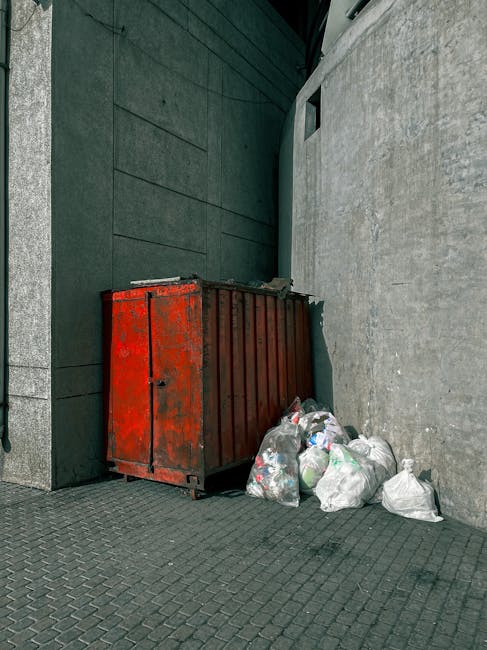
Rubbish removal near Hackbridge station: a practical local guide for homes, flats, and businesses
If you are looking for rubbish removal near Hackbridge station, chances are you want the job done quickly, neatly, and without the faff. Maybe there is a pile of old furniture waiting in the hallway, builder's debris from a weekend project, or a garage that has slowly become storage for everything you meant to deal with "next week". We have all seen that week stretch into months.
This guide explains how local rubbish removal works, what to expect, what to avoid, and how to choose the right service for your space. It is written for everyday situations around Hackbridge station: tight access, flats, busy roads, awkward lifts, and the kind of clearances where timing matters more than theory.
For a fuller view of the company behind the service, you can also visit the about us page, or if you are ready to ask a question, the contact page is there too.
Table of Contents
- Why rubbish removal near Hackbridge station matters
- How rubbish removal near Hackbridge station works
- Key benefits and practical advantages
- Who this is for and when it makes sense
- Step-by-step guidance
- Expert tips for better results
- Common mistakes to avoid
- Tools, resources and recommendations
- Law, compliance, standards, or best practice
- Options, methods, or comparison table
- Case study or real-world example
- Practical checklist
- Conclusion
- Frequently asked questions
Why rubbish removal near Hackbridge station matters
The area around a station is different from a quiet suburban street. There is usually more foot traffic, more parking pressure, and less patience for clutter sitting outside. That matters because rubbish removal is not just about "getting rid of stuff"; it is about doing it in a way that does not create problems for neighbours, landlords, shop staff, or passers-by.
Near Hackbridge station, many jobs are time-sensitive. A flat might need emptying before a tenancy changeover. A small office might need desks removed before Monday morning. A builder might need the waste gone before the next delivery arrives. In each case, the value is not only the clearance itself, but the speed and coordination around it.
There is also the simple matter of space. Station-adjacent properties often have narrow hallways, shared entrances, limited loading room, or awkward access from the street. A good clearance service understands that. They do not just turn up and start lifting. They think about route, timing, carrying distance, and how to avoid bumping walls, blocking entrances, or making a mess on the pavement.
Practical takeaway: near a station, the best rubbish removal is the one that respects access, timing, and the people around the property. Fast is useful. Careful is better.
This is also where proper waste handling matters. Reputable operators separate reusable items, recyclables, and general waste where possible. If you want to see how sustainability fits into the wider service approach, the recycling and sustainability page is worth a look.
How rubbish removal near Hackbridge station works
In practice, rubbish removal usually starts with a description of what needs clearing, followed by an assessment of volume, access, and any special items. That could be done from photos, a phone call, or a visit depending on the job. Nothing fancy. Just enough detail to avoid surprises.
Once the scope is clear, the team arrives with the right vehicle and lifting equipment. They remove the waste, sort what can be reused or recycled, and leave the area swept through. For larger jobs, they may work room by room or load by load. For smaller jobs, it can feel almost too quick. A quick in-and-out, and suddenly the room breathes again.
Typical waste removal around the station can include:
- old furniture
- black bag waste from clear-outs
- broken appliances
- garage and shed contents
- light builders' waste
- office clutter and archived material
- garden cuttings and outdoor debris
Some jobs need a more tailored approach. A flat clearance, for example, often means stairs, shared corridors, and neighbour awareness. A bulky furniture collection may need careful handling of wardrobes, sofas, or mattresses. For those situations, specialised services such as flat clearance, furniture clearance, and furniture disposal can be the more sensible route.
Truth be told, the more prepared you are, the smoother it goes. If items are grouped by room or type, and the team knows which things stay and which go, the job tends to move much faster.
Key benefits and practical advantages
The obvious benefit is convenience. You avoid hiring a van, lifting heavy items yourself, and making repeat trips to a tip or transfer station. But the real value is broader than that.
- Less disruption: a team can remove a large amount in a single visit, which is especially useful near a station where parking is limited.
- Safer handling: bulky or sharp items are easier to move when trained people do it.
- Cleaner finish: the best services leave the space ready for its next use rather than half-done.
- Better planning: scheduled collection gives you a clear deadline, which helps with moves, refurbishments, and handovers.
- Waste segregation: separating reusable, recyclable, and general waste can support a better environmental outcome.
There is another benefit people often overlook: peace of mind. Once the clutter is gone, the room feels lighter. Sounds a bit obvious, maybe, but anyone who has cleared out a cramped loft, a packed garage, or a post-move flat knows the relief. You walk in and think, ah, there it is again, the actual room.
For businesses and landlords, there is also reputational value. A tidy entrance and a well-managed clearance say a lot. Not glamorous, perhaps, but very real.
If you are comparing waste options, the broader waste removal service page can help you understand how general clearance differs from more specific jobs.
Who this is for and when it makes sense
This kind of service is useful for a wide mix of people. You do not need a huge project to justify it. In fact, many jobs are fairly ordinary on paper and simply awkward in practice.
It makes sense for:
- Homeowners clearing spare rooms, garages, lofts, or sheds
- Tenants moving out and needing to leave a property tidy
- Landlords and agents dealing with end-of-tenancy or void-period clearances
- Flat owners with limited access and bulky items
- Offices replacing furniture or clearing archived materials
- Builders and tradespeople needing debris removed quickly
- Local businesses with mixed waste that should not linger out the back for days
It is also a good option when you do not have the time or physical capacity to move waste yourself. Let's be honest, a broken wardrobe is only "just one item" until you try to carry it down two flights of stairs by yourself. Then it becomes a very different story.
For property-specific clearances, these pages are often relevant: house clearance for whole-home jobs, home clearance for mixed domestic clear-outs, garage clearance for storage spaces, and loft clearance where access can be a bit of a workout.
Step-by-step guidance
If you want a straightforward way to organise rubbish removal near Hackbridge station, use this process.
- List what needs to go. Be specific. "General rubbish" is fine for a rough first message, but it helps to note furniture, bags, garden waste, or builders' debris separately.
- Check access. Stairs, tight corners, lift size, parking restrictions, and rear access all affect the job.
- Separate anything staying. This sounds basic, yet it saves a lot of bother later. Put keepers in one area and label them if needed.
- Ask for a clear quote. Make sure you understand what is included: labour, loading, disposal, and any extra handling for heavy items.
- Choose a convenient time. Around a station, early morning or quieter off-peak times can sometimes reduce disruption.
- Prepare the route. Clear hallways, move fragile items, and make the access path as open as possible.
- Walk through the job on arrival. A quick check at the start avoids assumptions. Five minutes here can save fifty later.
- Inspect the finish. Check that all agreed items have gone and the area has been left tidy.
If the job is related to a property renovation, the rubbish may include rubble, plasterboard, timber offcuts, or packaging. In that case, a dedicated builders' clearance can be more suitable than a general collection. The builders' waste clearance page explains that type of work more clearly.
Expert tips for better results
A few small decisions make a big difference.
Tip 1: Photograph the waste before you call. Good photos help with estimating volume and access. Include wide shots and close-ups. If there is a narrow stairwell or a bulky item, show that too.
Tip 2: Be honest about the difficult bits. A sofa that needs to come down three flights of stairs is not the same as a sofa sitting by the front door. No shame in saying so. It helps everyone.
Tip 3: Group items by type if you can. Furniture with furniture, bagged rubbish together, reusable items separated. It speeds things up and often makes the job feel less chaotic.
Tip 4: Think about disposal outcomes. If one item can be reused, repaired, or recycled, that may affect how it is handled. Not everything should be treated as plain waste.
Tip 5: Ask about insurance and safety. A professional provider should be able to explain how they manage lifting, transport, and liability. If you want a deeper look at that side of the service, the insurance and safety page is useful reading.
Small side note: if you are doing the sort of clean-up where you keep saying "I thought this would be quicker", you are probably doing it right. Rubbish has a funny habit of multiplying when nobody is looking.
Common mistakes to avoid
A lot of problems are easy to avoid once you know what to look for.
- Underestimating the volume. A few bags can turn into a full van load once everything is gathered together.
- Not checking access in advance. A parking issue near the station can delay the whole job.
- Forgetting fragile items. Mirrors, glass, and electronics need extra care.
- Mixing keep and remove piles. This causes confusion, and nobody enjoys that at the end of a long day.
- Choosing purely on speed. Fast is good, but not if the quote is vague or the service feels careless.
- Leaving special waste unmentioned. Some items need particular handling, so mention paint, chemicals, batteries, or anything unusual early.
One common oversight around stations is timing. A job that looks easy at 11am can be trickier during school-run or commuter periods. It is not dramatic, just real life. Busy roads, buses, people on the move. All of it matters.
Tools, resources and recommendations
You do not need a long toolkit for most rubbish removal jobs, but a few practical items can help.
- Labels or masking tape for marking keep, remove, and donate piles
- Heavy-duty bags for loose rubbish that might split in transit
- Gloves for sorting rough or dusty items safely
- A torch for lofts, garages, and under-stair spaces
- Photo notes on your phone so you can remember what was agreed
For business-related clearances, it is sensible to keep records of what was removed and when. That helps with internal housekeeping and, in some cases, tenant or facilities handovers. The business waste removal page is a good reference if your job sits on the commercial side of things.
If the waste is mostly furniture rather than mixed rubbish, the service may be simpler to organise through furniture disposal. That said, mixed jobs are common, and they are usually handled just fine with a little planning.
Law, compliance, standards, or best practice
Waste removal in the UK should be handled carefully and lawfully. That does not mean every customer needs to become a compliance expert, but it does mean you should use a provider that understands proper disposal routes and duty of care principles.
In plain English, you want to know that your rubbish is being handled by a responsible operator, that it is going to an appropriate facility, and that items are not being dumped somewhere they should not be. If a price seems suspiciously low, ask yourself why. Sometimes the answer is simply efficiency. Other times, not so much.
Best practice usually includes:
- clear descriptions of waste types before collection
- safe lifting and loading methods
- separation of recyclable and reusable items where possible
- careful handling of heavier or awkward objects
- clean, documented service terms so expectations are clear
When comparing services, it is also wise to review practical policies such as terms and conditions, payment and security, and the company's approach to recycling and sustainability. Those pages help you understand how the service is structured and what standards it follows.
If a property contains sensitive material, sharp debris, or anything uncertain, ask for guidance before collection. It is always better to pause and clarify than to assume.
Options, methods, or comparison table
There is more than one way to clear rubbish near Hackbridge station. The right option depends on the amount of waste, how quickly it needs to go, and how much lifting you want to do yourself.
| Method | Best for | Strengths | Trade-offs |
|---|---|---|---|
| Self-clearance | Very small loads, a few bags, single lightweight items | Can be cheap if you already have transport | Time-consuming, heavy lifting, parking and disposal hassle |
| Skip hire | Longer projects with ongoing waste output | Useful for renovations and larger volumes | Needs space, permits may be needed, loading is your job |
| Man and van clearance | Mixed domestic waste, furniture, quick clear-outs | Fast, flexible, low hassle | Best value depends on access and volume |
| Specialist clearance service | Flats, offices, lofts, garages, builders' waste | Tailored handling and faster completion | Not always the lowest headline price, though often better value |
For most people near the station, a clearance service is the sweet spot. It suits tight access, mixed items, and jobs that need to be done in one go. If your priority is a clean result with less stress, that usually wins.
Case study or real-world example
Here is a realistic example. A tenant in a first-floor flat close to Hackbridge station has a mix of old shelving, a broken desk, four bin bags, and a mattress to remove before handing the keys back. There is no lift. The stairwell is narrow. The hallway has a bend halfway down, which is always the fun bit, of course.
In that kind of job, the most useful prep is simple: separate the items, clear the walkway, and confirm what stays. A good clearance team will then plan the lift sequence so the heavier pieces come first, followed by the loose waste. If they know parking access and timing in advance, the whole thing can often be completed in one visit.
The likely outcome? Less time worrying about the inventory check, fewer trips up and down the stairs, and a room that looks ready for the next stage. Not dramatic. Just efficient, which is exactly what most people want.
A similar approach works for small offices, garages, and refurb jobs. The details change, but the logic stays the same: good prep, clear communication, safe removal, tidy finish.
Practical checklist
Use this checklist before booking rubbish removal near Hackbridge station.
- List all items that need removing
- Note anything fragile, heavy, sharp, or unusual
- Take photos of the waste and access route
- Measure large items if space is tight
- Check whether parking or loading access is restricted
- Separate keep items from remove items
- Ask what is included in the price
- Confirm the collection time and arrival window
- Keep pathways clear for safe carrying
- Review the property afterwards to make sure nothing was missed
If your job is mainly domestic, you may also want to compare related services such as house clearance, home clearance, or garage clearance to see which one matches the job most closely.
And if the waste came from outdoor work, the right fit may be garden clearance instead. Easy to mix them up, especially when the pile is a bit of everything.
Conclusion
Rubbish removal near Hackbridge station is really about making a busy, awkward job feel manageable. The best service is prompt, careful, and organised around the realities of local access, parking, and property type. Whether you are clearing a flat, emptying a garage, removing builder's waste, or just getting rid of a stubborn pile of clutter, the right approach saves time and reduces stress.
Focus on clear descriptions, sensible timing, and a provider that treats the job like more than a quick lift and load. That is where the real value is. Not just in the truck turning up, but in the calm that follows when the space is finally clear.
If you want to learn more about the company, see the service options, or check practical information before you book, the linked pages above should help. And if you are still at the "right, where do I even begin?" stage, that is perfectly normal. Start with the pile. One step at a time.
Get a free quote today and see how much you can save.
Frequently Asked Questions
What does rubbish removal near Hackbridge station usually include?
It usually includes collection, loading, transport, and disposal of unwanted items such as household rubbish, furniture, garden waste, or light builders' debris. The exact scope depends on the provider and the job details.
Is rubbish removal better than hiring a skip near the station?
For many smaller or mixed clearances, yes. A rubbish removal service is often easier when access is tight, parking is limited, or you do not want to do the loading yourself. A skip can make more sense for ongoing renovation waste.
How quickly can rubbish be removed from a flat near Hackbridge station?
Often quite quickly, provided access is clear and the waste has been described accurately. Flat clearances are usually faster when the items are grouped and the route out of the property is unobstructed.
Can you remove bulky furniture as part of a clearance?
Yes, bulky items are commonly removed. Sofas, wardrobes, beds, and tables are all typical examples. If the job is mainly furniture, dedicated furniture clearance or furniture disposal may be the closest fit.
What if I only have a small amount of rubbish?
Small jobs can still be worth booking if they are awkward to transport or if you want everything gone in one visit. A few bags, one bulky item, or a small pile of mixed waste can be enough to justify it.
Do I need to be home during the collection?
Usually, yes, at least at the start, so you can confirm what is being removed and answer any access questions. Some arrangements may be possible otherwise, but it is best to check in advance.
How should I prepare for rubbish removal near a station?
Make the access route clear, separate keep and remove items, and take photos if there is anything unusual. If parking or loading is tricky, mention that early so the team can plan properly.
What kinds of waste should I mention before booking?
Mention anything heavy, sharp, fragile, or unusual, plus items like paint, batteries, or mixed construction debris. The more accurate the description, the easier it is to plan a safe collection.
Is rubbish removal suitable for offices and business premises?
Yes. It is often a very practical option for desks, chairs, filing, and general office clutter. For ongoing commercial needs, business waste removal is usually the better category to explore.
How do I know the waste will be handled responsibly?
Look for clear information about disposal practices, safety, payment, and recycling. Pages such as recycling and sustainability, terms and conditions, and insurance and safety are useful signs that the provider has thought things through.
What is the best time to book rubbish removal near Hackbridge station?
Quieter times are often easiest, especially where parking or road access can be affected by commuter traffic. Early scheduling also helps if you are working to a move-out or handover deadline.
Can rubbish removal help with a full house or loft clear-out?
Absolutely. In fact, larger domestic jobs are where a professional service often saves the most time and effort. House clearance, home clearance, garage clearance, and loft clearance are all common use cases.